
Advance Tax vs. Withholding Tax: A Quick Guide
Understanding the between advance tax and withholding tax can be crucial for individuals and businesses a like. Both methods are employed by tax authorities to ensure timely tax collection. However, they differ significantly in terms of responsibility, timing, and basis of calculation.
What is Advance Tax?
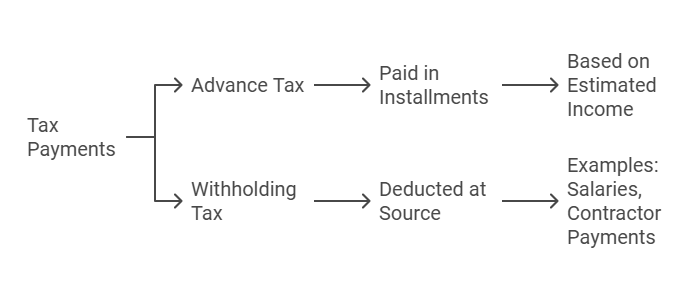
Advance tax is a method of tax payment where the taxpayer is responsible for estimating their annual income and paying tax in advance. This is typically done in installments throughout the year. The tax amount is calculated based on the taxpayer’s estimated income for the year. The primary purpose of advance tax is to ensure timely tax payment and prevent potential defaults at the end of the year.
What is Withholding Tax?
Withholding tax, on the other hand, involves a third party, such as an employer or a service provider, deducting tax at the source of payment. This means that the tax is deducted from the payment made to the recipient at the time of payment or credited to their account. The tax amount is calculated based on the payment made to the recipient. The primary purpose of withholding tax is to simplify the tax collection process and reduce tax evasion.
Key Differences
| Feature | Advance Tax | Withholding Tax |
|---|---|---|
| Responsibility | Taxpayer | Deductor |
| Timing | Paid in advance | Deducted at source |
| Basis of Calculation | Estimated income | Payment made |
| Purpose | Ensure timely payment | Simplify tax collection |
In Conclusion
Both advance tax and withholding tax are essential tools for tax authorities to maintain a steady flow of revenue and ensure compliance with tax laws. While advance tax requires proactive planning and estimation, withholding tax is a more straightforward process where the responsibility lies with the payer.
By understanding the key differences between these two methods, individuals and businesses can better manage their tax obligations and avoid potential penalties.