
FBR Targets 73,000 Doctors Over Massive Tax Non-Compliance
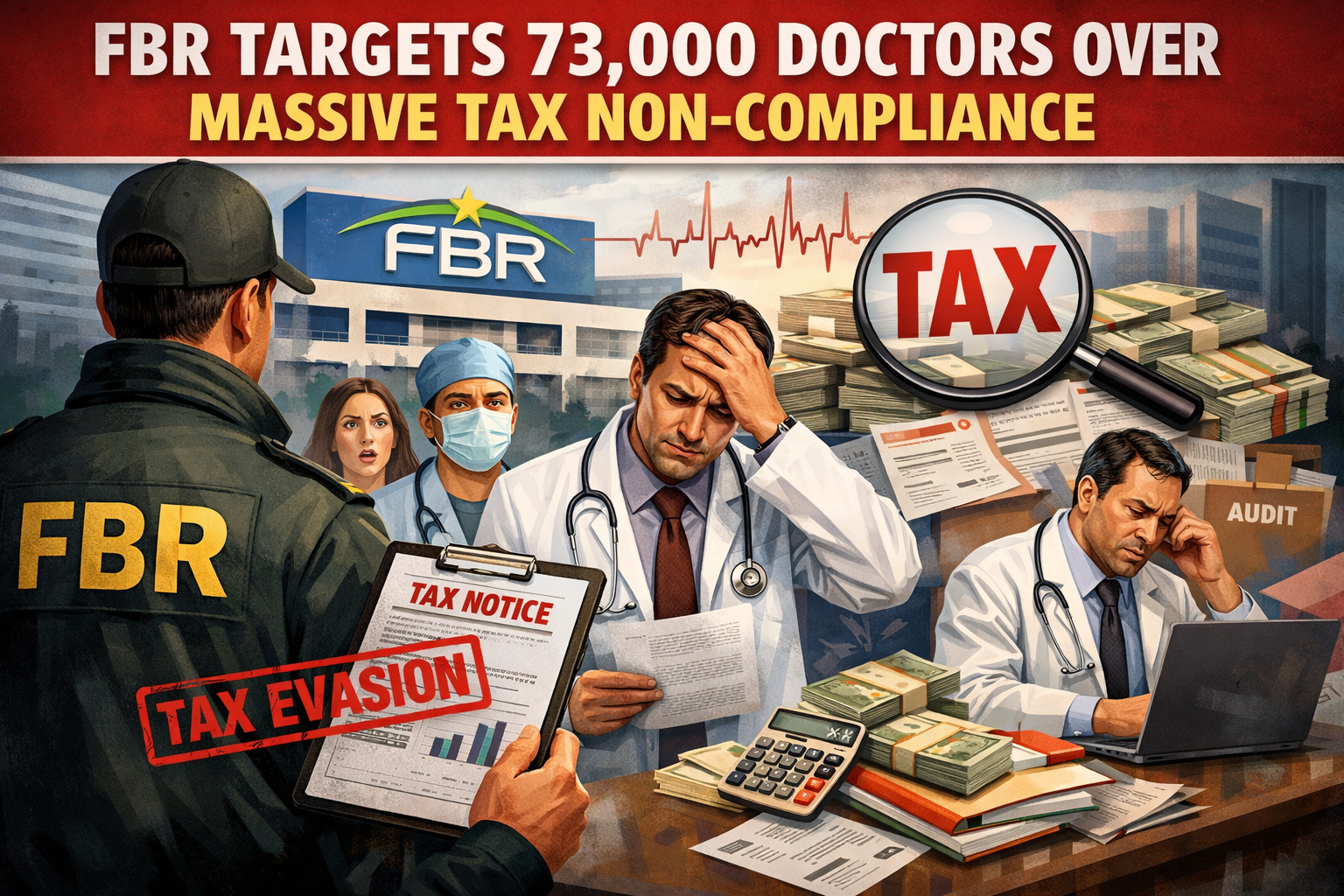
Pakistan’s Federal Board of Revenue (FBR) has initiated a major enforcement campaign targeting medical practitioners, following alarming data revealing severe tax non-compliance within the profession. With over 73,000 registered doctors failing to file tax returns—despite operating in one of the country’s highest-earning fields—the FBR aims to address what officials call a “serious tax compliance crisis”
A Widespread Tax Compliance Crisis
The scale of non-compliance is staggering. According to official figures, Pakistan has 130,243 registered doctors in the FBR’s records. However, only 56,287 filed income tax returns this year, leaving 73,956 doctors who did not file at all. This means that more than half of the country’s medical practitioners are not meeting basic tax obligations, despite their profession’s high earning potential.
Furthermore, among those who did file returns, the declarations raise serious questions. For instance, 31,870 doctors reported zero income from private practice in 2025, while 307 practitioners claimed losses—even though they maintain busy clinics in major cities. In total, only 24,137 doctors acknowledged earning any business income.
Table: Summary of Doctor Tax Filing and Declarations (2025)
| Category | Number of Doctors | Key Detail |
|---|---|---|
| Total Registered Doctors | 130,243 | Registered with FBR |
| Filed Tax Returns | 56,287 | ~43% of registered doctors |
| Non-Filers | 73,956 | ~57% of registered doctors |
| Zero Income Declared | 31,870 | From private practice |
| Reported Losses | 307 | Despite full patient loads |
| Claimed Business Income | 24,137 | Only ~19% of total |
Stark Contrast Between Earnings and Tax Payments
The FBR’s analysis reveals a glaring mismatch between doctors’ observable earnings and their reported tax liabilities. For example, many doctors charge consultation fees ranging from Rs. 2,000 to Rs. 10,000 per patient, yet their declared daily tax payments are often lower than the fee for a single consultation.
Consider these findings:
- 17,442 doctors with annual receipts above Rs. 1 million paid an average of just Rs. 1,894 per day in taxes.
- 10,922 doctors earning between Rs. 1 million and Rs. 5 million annually paid only Rs. 1,094 per day.
- The highest earners—3,327 doctors with receipts exceeding Rs. 10 million—paid an average of Rs. 5,500 daily, a fraction of their likely earnings.
Additionally, 38,761 practitioners reporting receipts below Rs. 1 million declared tax liabilities of merely Rs. 791 per day. In a particularly striking case, 31,524 doctors who declared zero receipts collectively claimed Rs. 1.3 billion in tax refunds.
These figures become even more concerning when compared to other professionals. For instance, a Grade 17–18 government officer often pays more in monthly taxes than many doctors contribute over an entire quarter. This disparity highlights a tax system that disproportionately burdens those with fixed, verifiable incomes while allowing others to avoid their obligations.
FBR’s Enforcement Strategy and Legal Tools
In response to these findings, the FBR is implementing a multifaceted enforcement strategy. The authority is leveraging Section 175C of the Income Tax Ordinance, which empowers it to install Point of Sale (POS) systems at hospitals and clinics. Although the medical community has resisted this measure, the FBR is escalating the matter to ensure compliance.
The enforcement drive includes several key actions:
- Cross-verifying bank transactions, clinic revenues, and digital appointment records.
- Matching patient records linked to CNICs with reported earnings.
- Conducting surprise audits of medical facilities.
- ssuing notices to non-filers and under-reporters.
Moreover, the FBR is expanding its scrutiny beyond individual doctors to include private clinics and hospitals allegedly involved in large-scale tax evasion. Officials emphasize that tax compliance among high-earning professions is no longer optional but essential for national economic stability.
Conclusion
The FBR’s crackdown on tax-evading doctors underscores a pressing need for transparency and compliance in high-earning professions. With over 73,000 doctors failing to file returns and many more underreporting income, the campaign aims to reclaim lost revenue and ensure a fairer tax system.
For medical practitioners, the message is clear: tax compliance is no longer optional. As the FBR intensifies its enforcement, doctors and other high earners must align their reported incomes with observable realities. Ultimately, a more equitable tax system will benefit all Pakistanis, fostering economic stability and public trust.
Disclaimer: This article is based on publicly available data and reports. For personalized tax advice, consult a qualified tax professional or visit the FBR’s official portal.